Someone asked me a question the other day related to generative AI (because why not AI), and it went something like ‘what do you think is going to be the next trend here in 6 to 12 months?’.
The simplest answer I have is that big data is coming back, and it’s going to be highly relevant to many teams as the agentic AI era continues. But the foundation of agents isn’t built on your structured data. It’s built on logs, interactions, and the mess of data residing in your Google Workspace, Office (CoPilot365), and other platforms that have been either off limits, too expensive to track, or frankly, just not considered as valuable.
A ‘simple’ CRM agent example
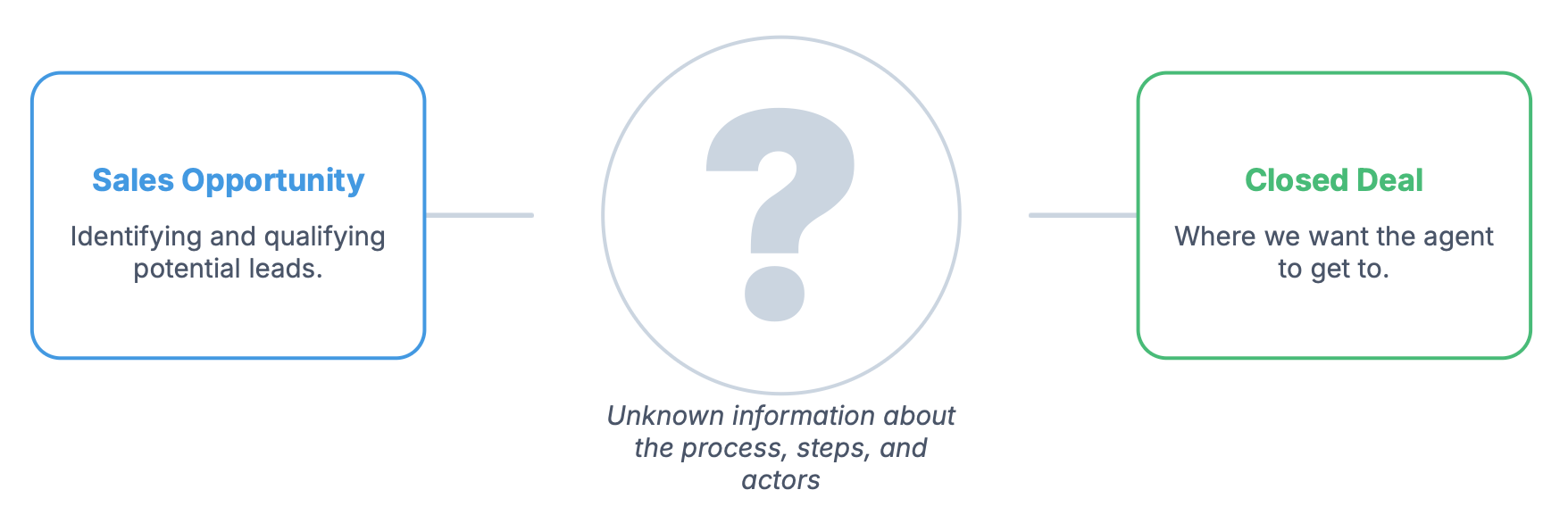
Here’s a simple business case. Let’s say you are going to create a chatbot for a sales agent. The agent is designed to be an assistant for your sales team to answer questions about specific deals, deal designs, customer analysis, and even deal support. You probably have a CRM that has the basics like what the customer account is, some sloppy opportunity data, and some light ‘contact’ information.
But the information your agent needs in order to learn is all about the interactions that take place across prospects, deals, and opportunities. This data might look something like:
Meeting transcripts between a sales representative and a prospect. Other transcripts between your internal teams talking about the deal size, approach, and even contracting.
Spreadsheets with analytics in them about the deal and different values.
Log data from your other systems (say your actual CRM logs) for changes to the deal over time, or how a what-if scenario engine is used.
For most organizations, this represents a pile of very messy, large data. And frankly, it wasn’t that useful before. However, agents need to understand the glue (aka processes) that actually create outcomes in order to re-enact and improve. Imagine you have to improve one of your skills, and the only feedback you have is the input, and the outcome. Aligning your own trajectory to the outcome is a hit or miss activity, and where we typically say the agent failed and move on when we didn’t give the agent anything useful to get started with.
Code for this essay
agentic-memory
Inspired by sleep-phase memory consolidation: episodic agent session trajectories are clustered offline during 'dream cycles' and promoted into high-confidence crystallized developer beliefs in Google Cloud Spanner.
Sample output from a local run
$ uv run python -m electric_sheep.dream --scope workspace --min-confidence 0.90
DREAM CONSOLIDATION COMPLETE · Scanned 18 session trajectories
PROMOTED BELIEF #042: 'Always run uv run pytest -v and maintain <3s unit test execution' (confidence=0.97)
SPANNER COMMIT: projects/davenport-boutique/instances/electric-sheep/databases/memoryGet new posts by email
I send new essays by email through Substack. Subscribe there and they'll land in your inbox.
Subscribe on Substack ↗